
Tree limbs can affect a roof gradually or cause sudden damage during a storm. Overhanging branches may scrape shingles, drop debris into drainage systems, and create damp areas, while larger limbs can break through roofing materials or damage gutters, flashing, and structural components.
For homes in Cooperstown, NY, the combination of mature trees, winter snow, ice, strong winds, and freeze-thaw cycles can increase these risks. Understanding how tree growth interacts with a roof makes it easier to recognize problems before a minor issue becomes water damage inside the home.
How can tree limbs damage roofing materials?
Tree limbs most commonly harm roofs through repeated contact, falling debris, and impact. The severity depends on the size of the limb, its distance from the roof, the type of roofing material, and the weather conditions involved.
Branches that rub against shingles can wear away the protective surface and loosen individual tabs. This damage may begin as small scuffing that is difficult to see from the ground. Over time, exposed areas can become more vulnerable to moisture, sunlight, wind, and temperature changes.
Falling branches can cause more obvious damage, including:
- Cracked, torn, or missing shingles
- Punctures in roofing membranes
- Bent or separated flashing around chimneys, vents, and wall intersections
- Damaged ridge caps or roof edges
- Dents or cracks in gutters and downspouts
- Broken roof vents or skylight components
A limb does not have to be large to cause trouble. Smaller branches can strike repeatedly during windy weather, while a heavier branch may break suddenly after becoming weakened by decay, ice, or snow.
Why are overhanging branches a concern even when they do not fall?
Branches that remain above a roof can create problems without causing a dramatic impact. Leaves, twigs, bark, and seed pods collect in valleys, behind roof features, and along gutter edges. These materials hold moisture against roofing surfaces and can slow the movement of rainwater.
Persistent shade also reduces the roof’s ability to dry after rain or melting snow. Damp conditions can encourage moss and algae growth, especially on roof sections that receive limited sunlight. Moss is not automatically proof of a failing roof, but heavy growth can lift shingle edges and make the surface more vulnerable to wind and water intrusion.
Branches may also act like a path for animals. Squirrels and other wildlife can use limbs to reach roof edges, vents, soffits, or attic openings. Once an opening is found, moisture and pests may enter through the same area.
How do winter conditions increase tree-related roof risks?
Winter weather can turn an otherwise manageable branch into a serious hazard. Snow and ice add weight to limbs, causing them to bend closer to the roof or break without much warning. A branch that clears the roof during summer may rest against shingles after a heavy snow or freezing-rain event.
Freeze-thaw cycles create additional stress. Water enters cracks or weakened wood, freezes, expands, and contributes to splitting. Repeated cycles can make limbs more likely to fail during wind or during the weight of a later storm.
For households in the area, roof inspections after major ice, wind, or wet snow events can be useful, particularly if branches have visibly shifted or if new debris is present on the roof.
What roof damage should homeowners look for after a storm?
Some problems can be seen from the ground, while others require a closer inspection. Walking on a roof is hazardous, especially when shingles are wet, icy, steep, or damaged.
From the ground, look for:
- Missing or uneven shingles
- Freshly broken limbs or large accumulations of branches
- Sagging gutters or detached downspouts
- Bent metal flashing
- Cracked vent covers
- Shingle pieces in the yard or near downspouts
- New water stains on ceilings or upper walls
Inside the attic, damp insulation, daylight visible through the roof deck, musty odors, or water marks may indicate that a branch impact or long-term rubbing has compromised the roof assembly.
A roof leak may not appear directly below the damaged area. Water can travel along rafters, roof decking, insulation, or interior framing before reaching a ceiling. That is why a small stain may reflect damage several feet away.
Can tree debris clog gutters and cause roof leaks?
Yes. Leaves and small branches can block gutters and downspouts, preventing water from draining away from the roof. During rain, water may back up beneath the lower edge of shingles or overflow against fascia boards and exterior walls.
In winter, clogged gutters can contribute to ice buildup along the roof edge. Ice dams form when snow melts on warmer roof sections and refreezes near colder eaves. Tree shade and blocked drainage are not the only causes, but they can make moisture management more difficult.
Overflowing water may damage:
- Fascia and soffit materials
- Exterior trim
- Siding and masonry
- Attic insulation
- Interior ceilings and walls
- Foundation-adjacent areas near downspout discharge points
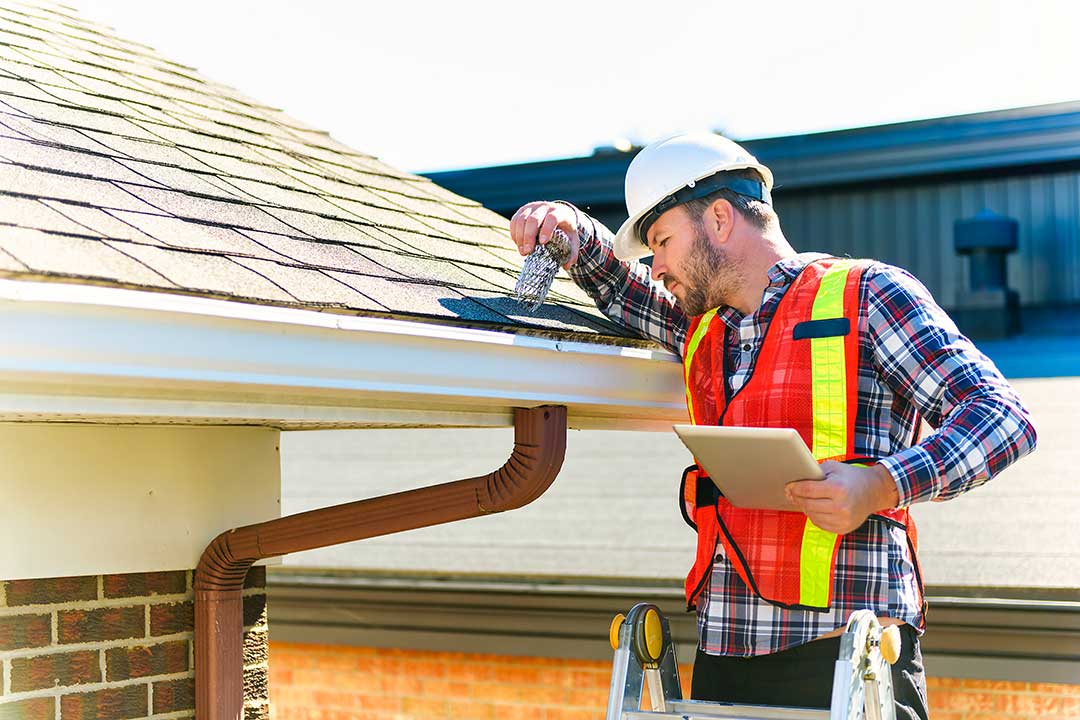
Keeping gutters clear is therefore part of roof maintenance, although clearing them from a ladder can be dangerous when branches, ice, or steep rooflines are involved.
How far should tree branches be from a roof?
There is no single distance that works for every tree or home, but branches should not rest on or scrape against roofing materials. Clearance should account for normal wind movement, seasonal growth, and the possibility that snow or ice will weigh the branch down.
Branches near a roof deserve closer attention when they are:
- Dead, cracked, split, or hanging
- Growing from a trunk with visible decay
- Positioned above roof valleys or drainage areas
- Close to chimneys, vents, skylights, or utility connections
- Large enough to strike the roof if they break
- Leaning toward the structure or showing exposed roots
Tree growth should be assessed with the tree’s overall condition in mind. Cutting a branch without understanding its structure can create new hazards, weaken the tree, or leave an uneven wound. Work near power lines or above a roof is particularly hazardous and may require qualified tree-care expertise.
Should a fallen limb be removed from the roof immediately?
A fallen limb should be treated as a safety issue first. Do not climb onto the roof to move it, especially after a storm. The branch may be supporting unstable material, covering a damaged area, or resting near electrical equipment.
If the limb has pulled down wires, damaged a service connection, or is touching electrical equipment, stay clear and notify the appropriate utility or emergency authority. If the roof is actively leaking, place containers under interior drips when safe, move furnishings away from the area, and document visible damage from the ground.
Temporary interior measures can limit damage, but they do not repair punctured roofing, damaged flashing, or compromised decking. Roof damage that remains exposed to rain or melting snow can worsen quickly.
How can homeowners reduce tree-related roof damage?
Regular observation is more useful than waiting for a major storm. During spring and fall cleanup, look for branches that have begun rubbing against the roof, limbs that have grown over roof edges, and deadwood that could fall during high winds.
Helpful maintenance practices include:
- Keep roof valleys and gutters free of leaves and branches.
- Check attic spaces periodically for dampness or daylight.
- Watch for ceiling stains after heavy rain.
- Trim vegetation before branches begin contacting roofing materials.
- Inspect trees for dead limbs, cracks, leaning trunks, and signs of decay.
- Recheck vulnerable areas after ice storms, heavy snow, and strong winds.
- Keep photographs and notes of existing roof conditions for comparison after storms.
Tree management and roof maintenance are connected, but they are not the same task. A roof can appear sound while a nearby tree becomes hazardous, and a healthy-looking tree can still have a weak limb. Paying attention to both conditions helps protect the roof, attic, gutters, and interior spaces from preventable damage.
