
What should homeowners check before winter?
Preparing a roof for winter means identifying small problems before snow, ice, wind, and freezing temperatures make them harder to manage. In Cooperstown, NY, homeowners should pay particular attention to roof drainage, damaged shingles, attic moisture, flashing, and areas where snow may accumulate.
A winter roof inspection does not always require climbing onto the roof. Many useful checks can be completed from the ground, attic, and upper floors. Roof work becomes more hazardous as temperatures fall, so inspections and minor repairs are generally easier to handle during dry autumn weather.
Look for:
- Missing, cracked, curled, or loose shingles
- Dark areas or visible staining on roof surfaces
- Sagging roof lines or uneven sections
- Damaged metal around chimneys, vents, skylights, and roof edges
- Loose gutters, downspouts, or gutter fasteners
- Tree limbs that could scrape the roof or fall during a storm
- Moss, leaves, or other debris collecting in drainage areas
A roof that appears sound from the ground can still have problems around penetrations and edges. Flashing around chimneys, plumbing vents, dormers, and skylights deserves particular attention because these locations experience movement and are common points for leaks.
How should gutters and downspouts be prepared?
Clean gutters and downspouts before sustained freezing weather arrives, then confirm that water can move away from the foundation. Leaves and organic debris can block drainage, while standing water may freeze and add weight to the gutter system.
After cleaning, check that:
- Gutters remain firmly attached to the fascia
- Downspouts are connected and open
- Water exits several feet away from the foundation
- Elbows and underground drain connections are not blocked
- Gutter slopes direct water toward downspouts
- No section is pulling away from the roof edge
In a snowy climate, ice can form when warm roof areas melt snow and colder roof edges refreeze the runoff. This process can contribute to ice dams, but clogged gutters are not the only cause. Poor attic insulation, air leakage, inadequate ventilation, and uneven roof temperatures can also play a role.
Gutter guards may reduce debris, but they do not eliminate the need for inspection. Fine material can still collect on top of or beneath some systems, and ice can affect drainage even when leaves are not present.
Should roof shingles be repaired before the first snowfall?
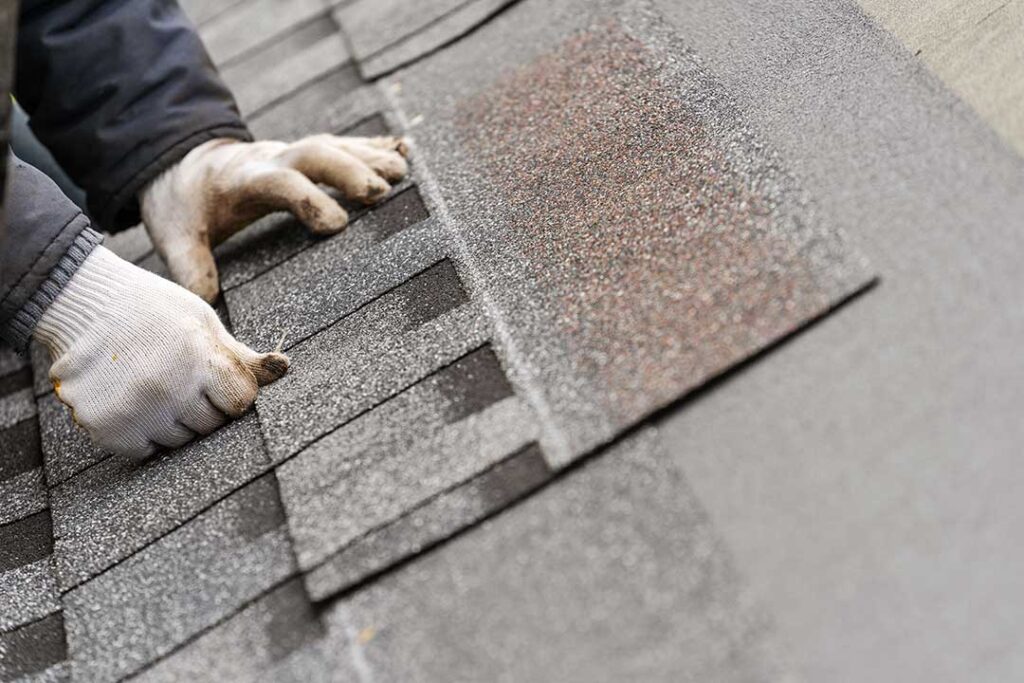
Yes. Damaged shingles, exposed fasteners, and deteriorated sealant are easier to address before snow and ice cover the roof. A single missing shingle may not cause an immediate leak, but wind-driven rain and repeated freeze-thaw cycles can enlarge the affected area.
Pay attention to:
- Shingles with exposed or lifted edges
- Cracks around valleys and roof penetrations
- Granules collecting heavily in gutters
- Nail heads that have become visible
- Blistering, buckling, or uneven shingle courses
- Loose ridge caps or edge materials
Do not apply roofing cement over every visible problem as a general solution. Surface patches may conceal damage without correcting the underlying issue, and some materials become brittle or fail to bond in cold weather. Repairs should be compatible with the existing roof system and completed under suitable conditions.
If the roof is steep, icy, visibly unstable, or difficult to access safely, remaining on the ground and arranging qualified assistance is the safer choice. Falls are a serious winter hazard, and ladders can become unstable on frozen surfaces.
What should be checked inside the attic?
The attic can reveal problems that are not visible from outside. During a cool, dry day, inspect the underside of the roof deck for damp areas, water stains, mold-like growth, rusted fasteners, or daylight entering through unintended openings.
Also look for:
- Compressed or missing insulation
- Gaps around plumbing vents, electrical penetrations, and chimneys
- Frost on roof sheathing
- Wet insulation
- Blocked soffit or ridge ventilation
- Bathroom or kitchen exhaust directed into the attic
Bathroom and kitchen exhaust should discharge outdoors through properly connected ducts, not into the attic. Moist indoor air entering a cold attic can condense on the roof deck or form frost. When temperatures rise, that moisture may melt and resemble a roof leak.
Ventilation is not a substitute for adequate insulation and air sealing. A balanced attic system generally needs both a way for air to enter near the eaves and a way for air to leave higher on the roof. Blocking soffit vents with insulation can interfere with airflow and create colder roof edges.
How can ice dams be reduced?
Ice dams form when snow melts on warmer portions of a roof and refreezes near colder eaves. They are more likely when heat escapes into the attic or when roof temperatures vary significantly across the surface.
Helpful preventive steps include:
- Sealing air leaks between the living space and attic
- Improving insulation where it is insufficient
- Keeping soffit and other designed ventilation paths open
- Preventing warm air from escaping around attic hatches and light fixtures
- Keeping gutters and downspouts clear
- Removing snow only when it can be done safely
Ice-dam prevention starts inside the building, not just at the gutter line. Heat cables may help in limited situations, but they do not correct insulation or air-sealing problems and should be installed and operated according to safety requirements.
Do not chop ice dams with a hammer or shovel. Impact can damage shingles, flashing, gutters, and the roof deck. Pouring salt or chemical de-icers on roofing materials can also cause damage and may affect nearby plants or metal components.
What winter roof issues are easy to overlook?
Snow does not always fall evenly across a roof. Valleys, lower roof sections, porch roofs, and areas below upper roof slopes may collect more snow than the main roof surface. Snow sliding from a higher section can also place extra stress on lower edges, gutters, or nearby structures.
Other overlooked concerns include:
- Tree branches hanging over the roof
- Snow falling near doors, walkways, or heat pumps
- Vents blocked by snow
- Skylights hidden beneath accumulated snow
- Attic access doors that are poorly sealed
- Chimney flashing that appears sound but has open joints
- Roof sections above additions or enclosed porches
Older homes and houses with multiple roof additions may have several different roof slopes and drainage patterns. Each section should be considered separately rather than assuming the entire roof performs the same way.
When should winter roof conditions be treated as an emergency?
Prompt attention is warranted when water is actively entering the home, the ceiling is sagging, a large section of roof has shifted, or snow and ice are blocking a vent or creating an immediate structural concern. Electrical fixtures near water should be treated cautiously, and power should be shut off from a safe location if necessary.
Heavy snow should not automatically be removed from every roof. Roof design, snow type, wind, and accumulated weight all matter. Removing snow from the ground with a roof rake may be appropriate for some low-slope areas, but working from a ladder or climbing onto a snowy roof creates significant fall risk.
After a major storm, inspect ceilings, attic areas, gutters, and exterior roof edges when conditions are safe. Early signs of trouble may include new stains, dripping sounds, displaced shingles, unusual cracking, or gutters pulling away from the building.
A practical seasonal routine is to inspect the roof and attic in early fall, clean drainage systems before freezing weather, trim hazardous branches, and recheck vulnerable areas after major snow or wind events. These steps cannot prevent every winter problem, but they can help identify conditions before a minor defect becomes a larger one.
